OUR RESPONSIBILITY IN THE MOUNTAINS
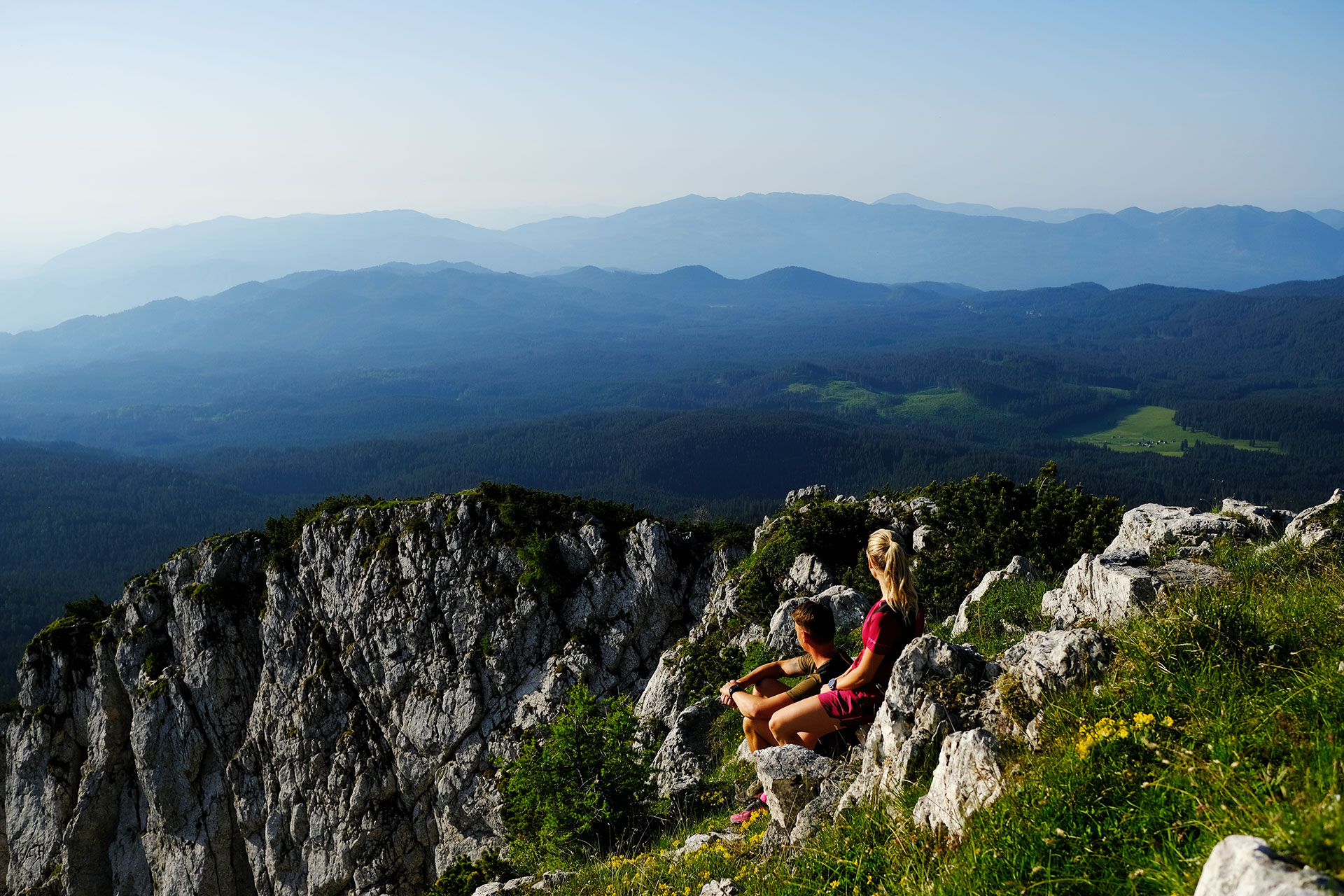
There is something beautifully simple about running in the mountains. A pair of shoes, a small pack, a trail disappearing into the distance and a body moving through the landscape. No engine. No road. No walls. Sometimes no other people for hours. Just the sound of your breathing, your footsteps, the wind in the trees and the mountains around you.
Perhaps this simplicity is one of the reasons we love trail running so much. But moving through wild places also comes with responsibility. The mountains are not a sports arena built for us. The trails existed long before our races, our GPS watches, our personal bests and our finish lines. They cross forests, alpine meadows, streams and high mountain terrain that are home to countless species and, in many places, surprisingly fragile ecosystems. When we run there, we are visitors.
THE PRIVILEGE OF RUNNING THROUGH WILD PLACES
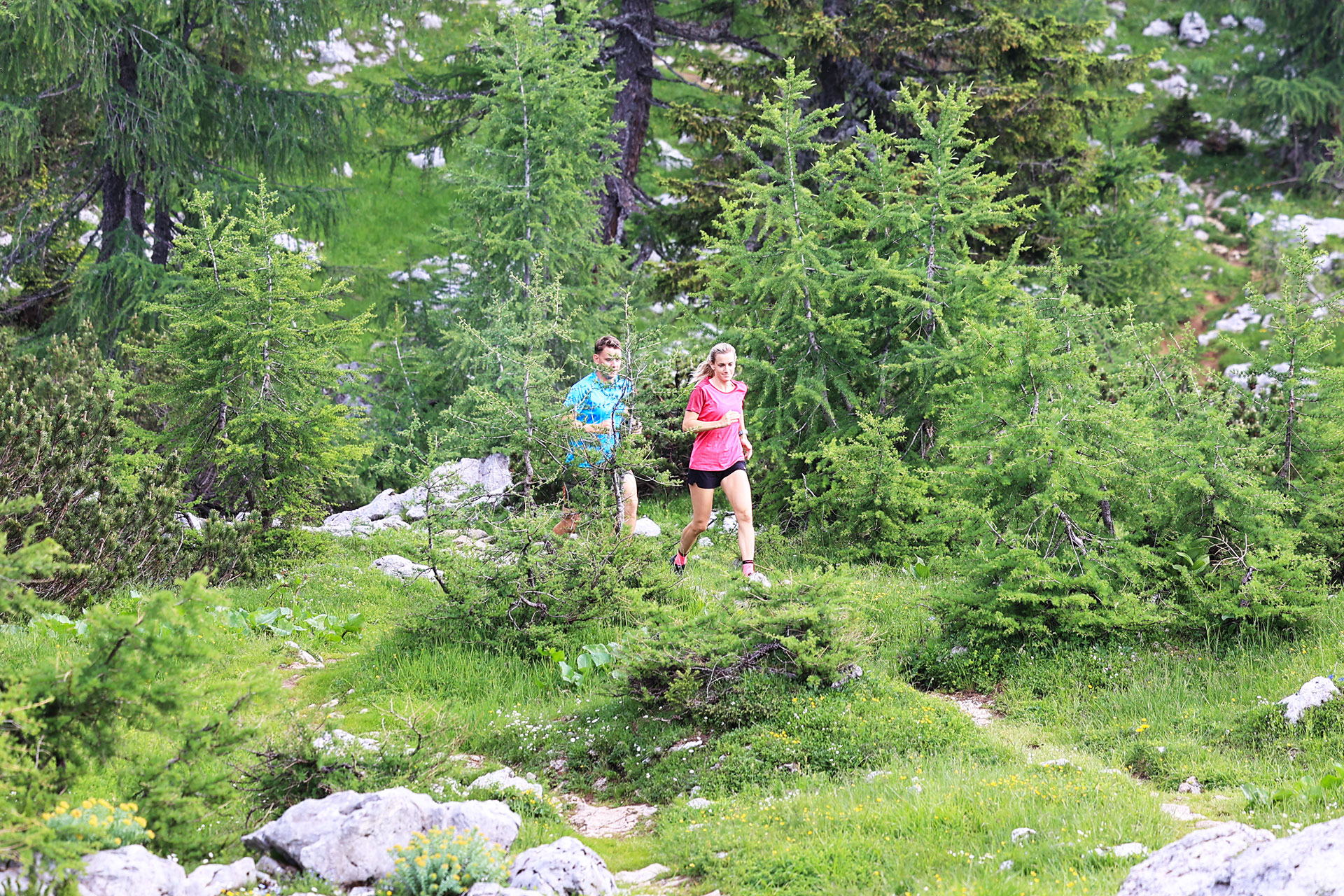
Trail runners experience landscapes in a very particular way. We travel faster than hikers, but slowly enough to notice how the environment changes around us. We leave the forest and enter the alpine world. We feel the temperature drop as we gain altitude. We cross a stream, climb through scree, run over a mountain pass and descend into another valley. Within a few hours, we may pass through environments that would otherwise take an entire day to explore. That is an incredible privilege.
WHERE SMALL FOOTPRINTS MATTER
Perhaps sustainability in trail running begins exactly there – not with rules, but with respect for the place that allows us to have these experiences. If we love wild landscapes, protecting them should be a natural part of how we move through them.
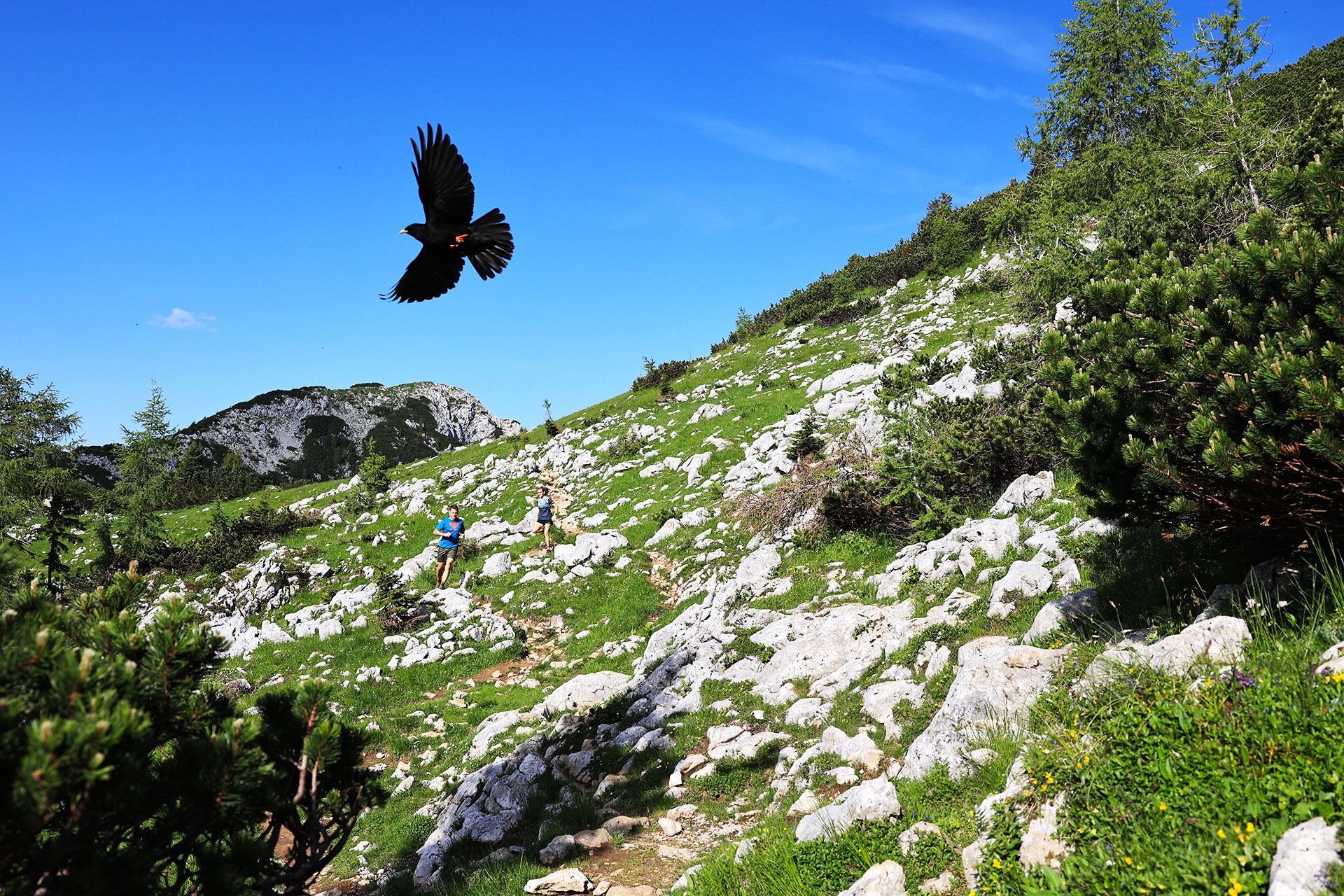
One runner may seem insignificant in a huge mountain landscape. But hundreds or thousands of runners can have an impact. The good news is that reducing that impact is often remarkably simple. Stay on existing trails instead of creating shortcuts, especially on steep terrain where erosion develops quickly. Avoid trampling alpine vegetation just to overtake another runner or save a few seconds. Carry everything you bring into the mountains back with you – including energy-gel tabs, food wrappers and tissues. Even something as small as the corner of a gel packet does not belong in the mountains. Respect wildlife. In quiet and remote areas, animals may be much closer than we realise. There is rarely a reason to approach them, chase them for a photograph or disturb them unnecessarily. And sometimes the most sustainable choice is simply to be quieter. To listen. To allow the mountains to remain mountains.
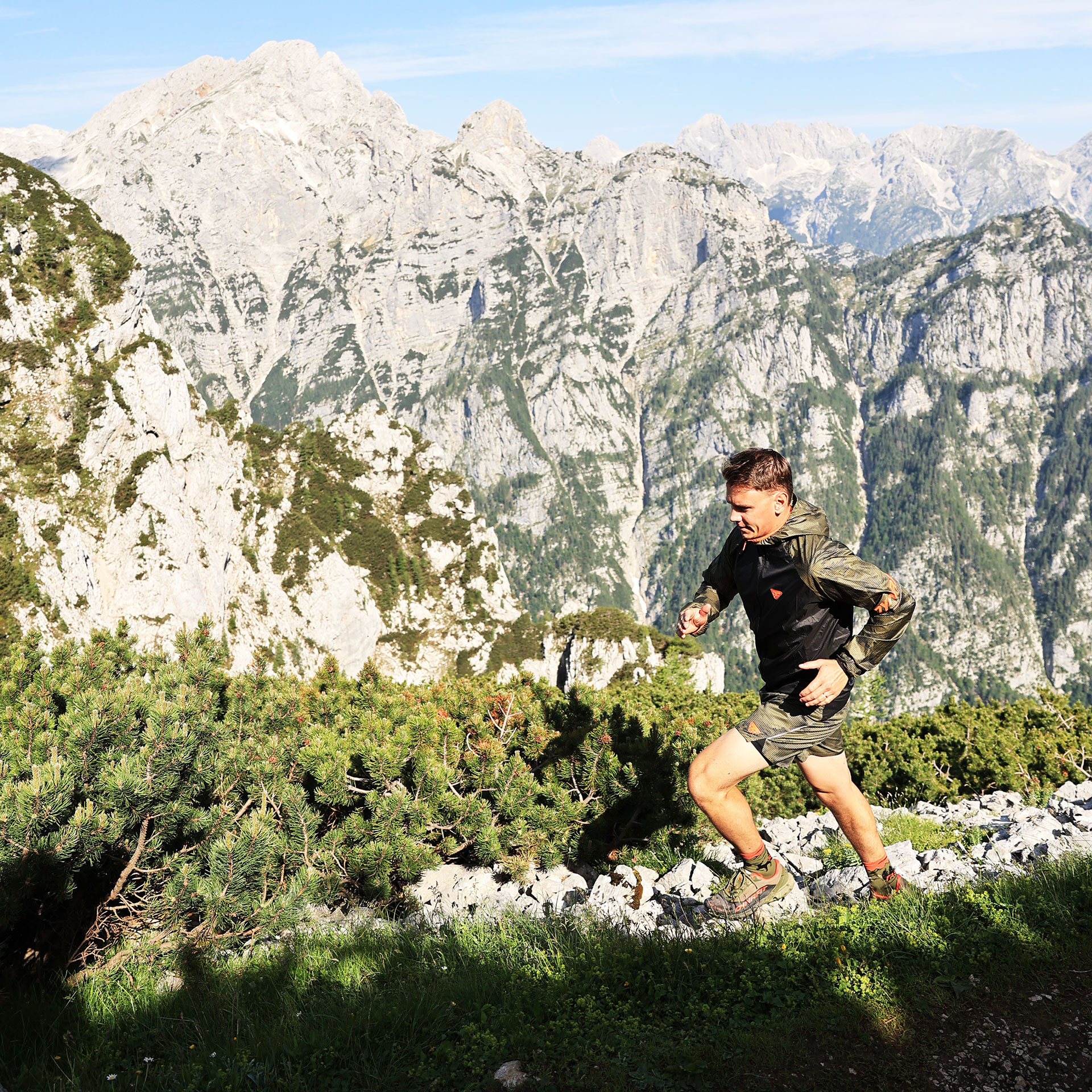
SUSTAINABILITY STARTS BEFORE THE START
Our environmental impact does not begin when we step onto the trail. How we travel to an event matters. What equipment we buy matters. How long we use it matters. Trail running has become a global sport, activity … accompanied by an enormous amount of equipment. New shoes, new packs, new watches, new jackets and new collections arrive every season. Good equipment is important in the mountains – sometimes essential for safety – but sustainability does not necessarily mean having the newest gear.
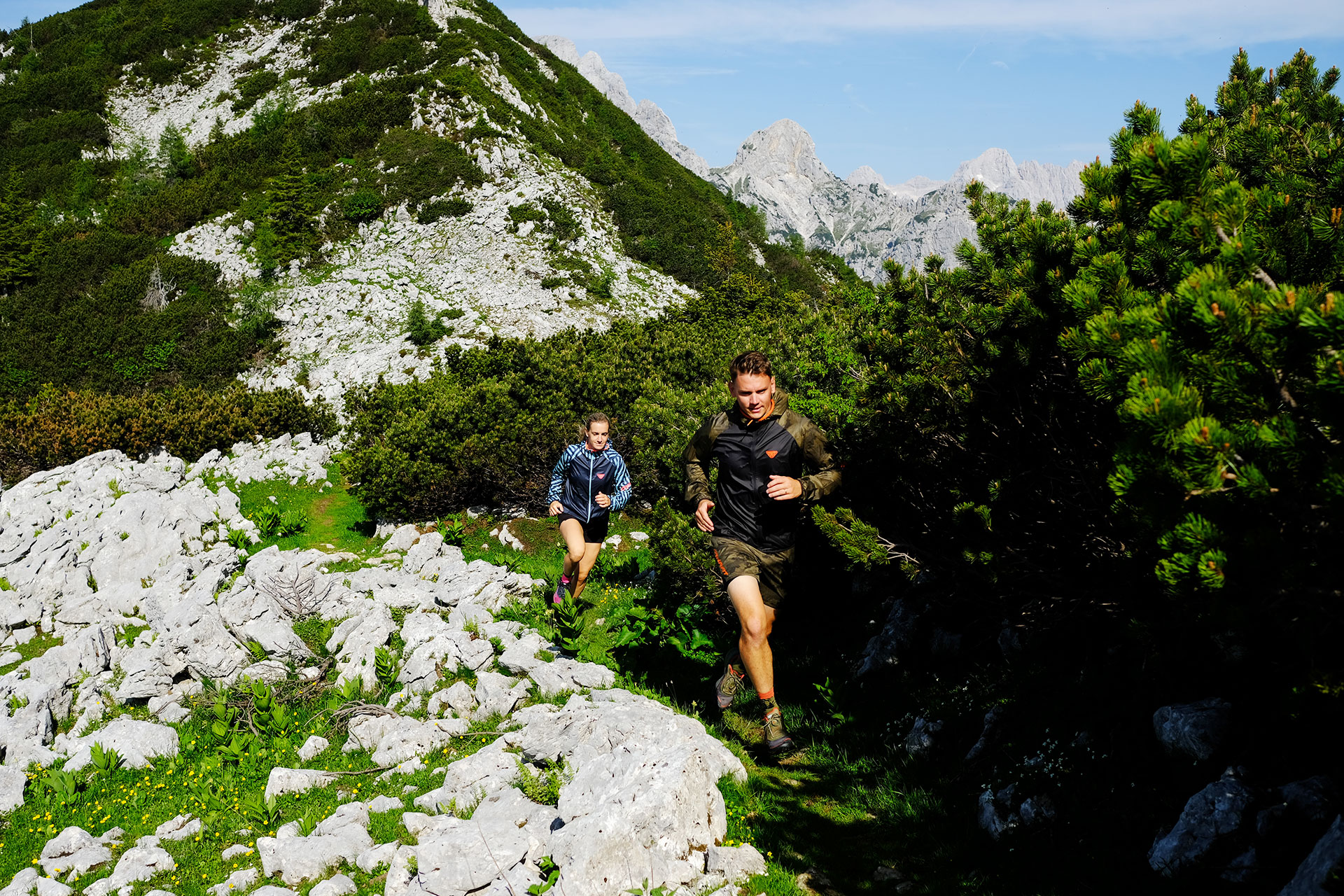
LEAVE NOTHING BUT YOUR FOOTSTEPS
There is an old idea in mountaineering that we should leave the mountains as we found them. For trail runners, perhaps we can go one step further. If you see a piece of rubbish on the trail, pick it up – even if it is not yours. If another runner is struggling, ask if they are okay. If the trail is muddy, resist the temptation to widen it by running around every puddle. If you pass hikers, slow down when necessary and greet them. If you cross a pasture, respect the animals and the people whose work has shaped that landscape for generations. These are tiny gestures. But they express something much bigger – the way we see our place in the mountains.
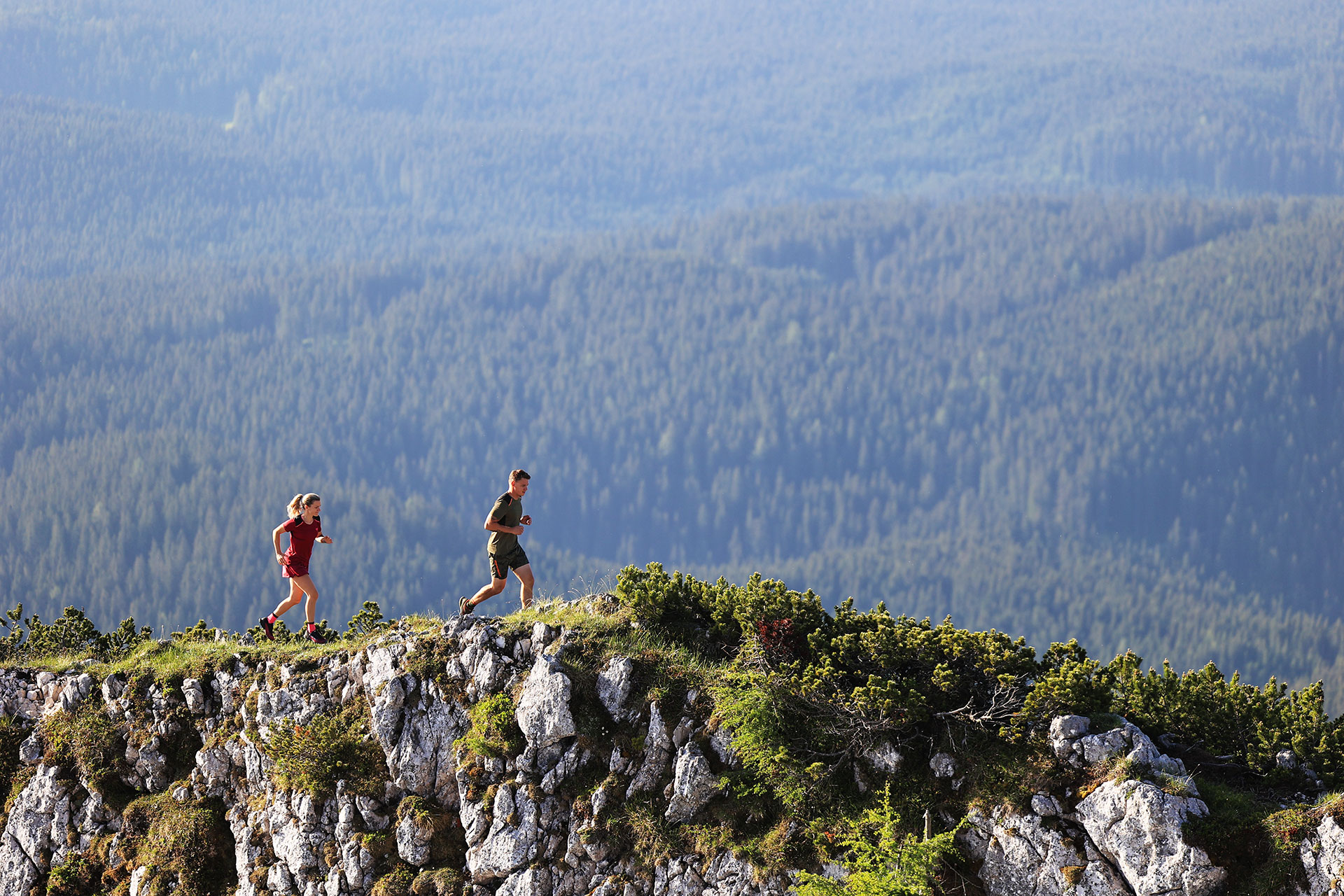
SPEED AND HUMILITY
Trail running celebrates speed, endurance and performance. We train to become stronger. We look at kilometres, elevation gain, race positions and finishing times. There is nothing wrong with that. Speed, running for a Personal Best can be beautiful. But mountains have a wonderful ability to put performance into perspective. Weather changes. Legs become tired. A climb that looked easy on the map suddenly feels endless. Clouds cover the summit. The trail becomes technical. The mountain does not care about our expectations. And perhaps that is one of the greatest things the mountains teach us – humility. Being a responsible trail runner is part of that humility.
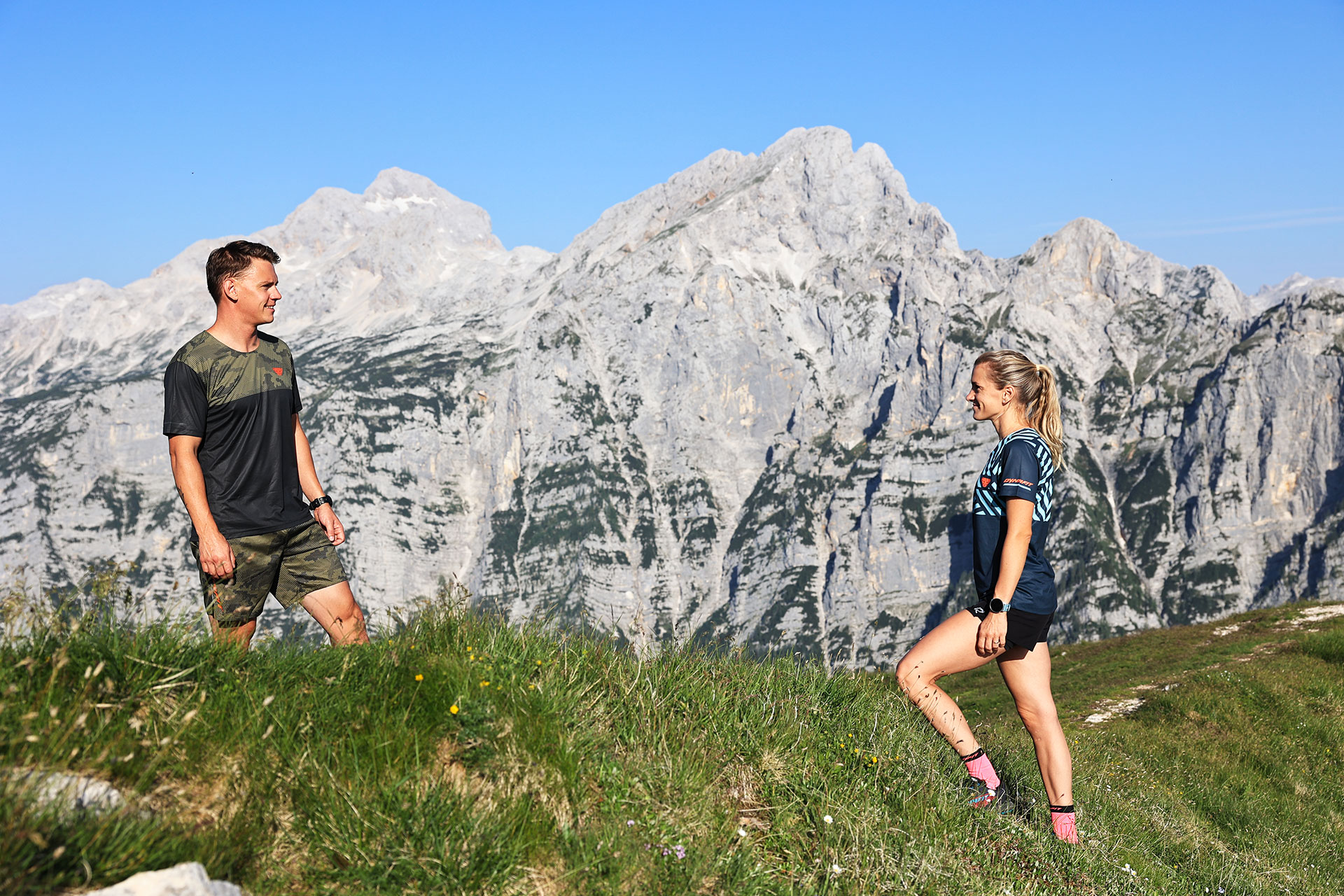
WE ARE ONLY PASSING THROUGH
During our tours and holidays in mountains, you will travel through some extraordinary landscapes of the Dolomites, Julian Alps, Carnic Alps, Durmitor, High Tauern, Corsica mountains … There will be moments when you are surrounded by other runners, volunteers and supporters. But there may also be moments when you find yourself almost alone – high above the valleys, somewhere between two mountain huts, with nothing but mountains stretching around you. These places are the reason mountain running exists. They are not simply the background to our race – They are part of the experience itself. Our responsibility is surprisingly simple: to run through them with curiosity, gratitude and respect – and to leave as little trace of our passage as possible. Because the best trail runner is not only the one who can move quickly through the mountains. It is also the one who understands how lightly we should move through them.

RULES FOR TRAIL RUNNING RESPONSIBLY IN THE MOUNTAINS
Run wild. Run free. But run with respect. The mountains are spectacular – but they are also fragile. A large part of the trails takes us through or alongside the protected environment. High-altitude ecosystems recover slowly, wildlife needs space and tranquillity, and even a small action multiplied by hundreds of runners can leave a significant footprint.
Being a trail runner here therefore means more than being fit and prepared. It means knowing how to be a good guest.
Here are ten simple principles to take with you onto the trail:
1. STAY ON THE TRAIL
Follow marked trails and the official race route. Do not cut switchbacks or create shortcuts, even when you can see the trail just below you. A few metres saved may seem insignificant, but repeated shortcuts damage vegetation and accelerate erosion – particularly on steep alpine terrain where recovery can take years. The fastest line is not always the right line.
2. LEAVE ABSOLUTELY NOTHING BEHIND
Everything you carry into the mountains should come back with you. Gel wrappers, bottle caps, tissues, banana skins and even tiny pieces of packaging have no place on the trail. Pay particular attention when opening gels and bars while running – small tabs are surprisingly easy to lose. And if you see somebody else’s rubbish, pick it up.
3. RESPECT WILDLIFE – YOU ARE RUNNING THROUGH THEIR HOME
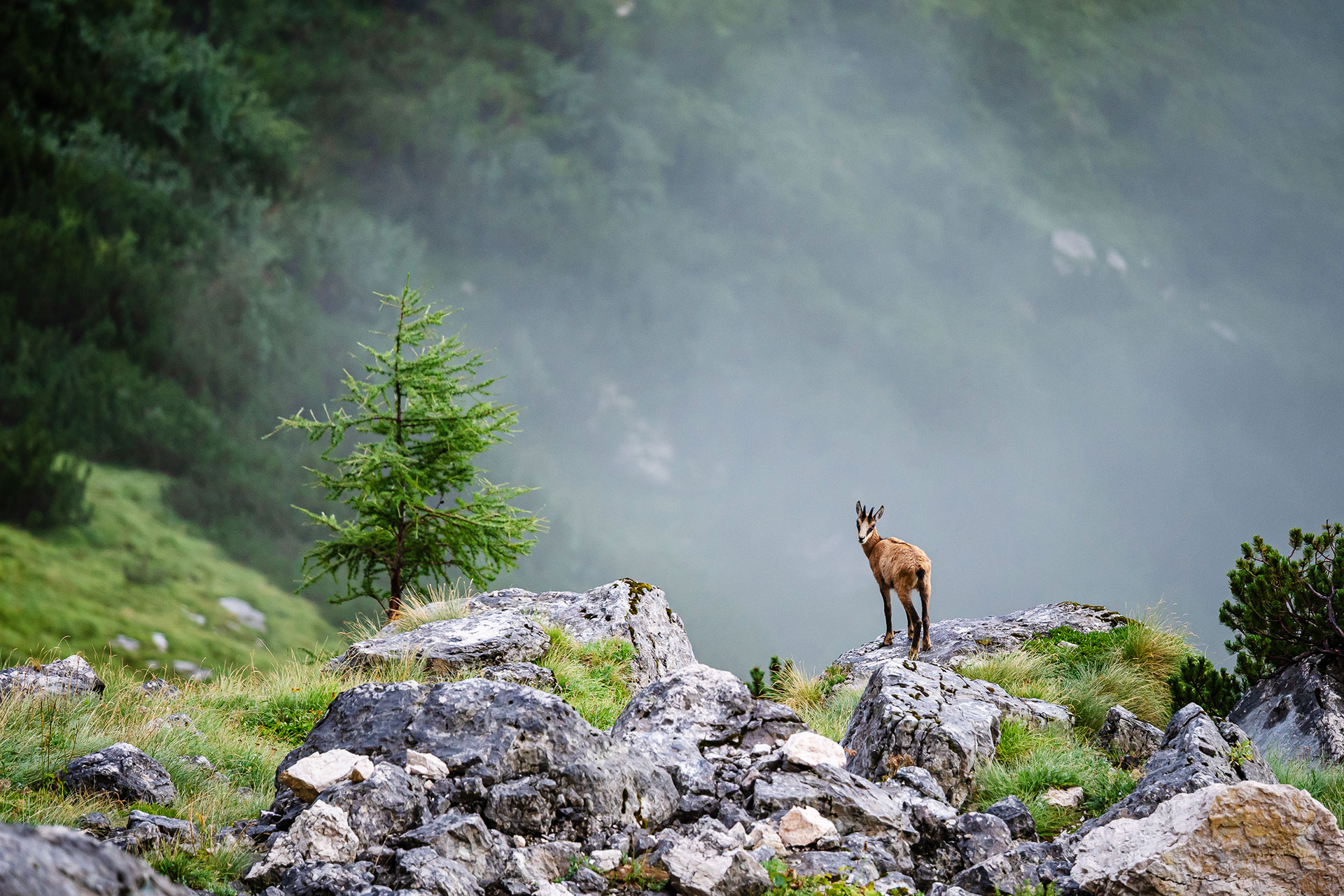
Chamois, ibex, deer, marmots, birds and many other species live in the landscapes through which we run. Observe them from a distance. Never chase an animal for a photograph and avoid unnecessary noise, particularly in remote areas. Mountains includes designated quiet zones where human activities should be adapted to allow wildlife to live with as little disturbance as possible.
4. PROTECT WHAT GROWS BENEATH YOUR FEET
Alpine flowers and plants may look strong enough to survive wind, snow and freezing temperatures, yet many are extremely vulnerable to trampling. Do not leave the trail to take a photograph, overtake another runner or find a more comfortable line across an alpine meadow. Never pick flowers or plants. Take the photograph. Keep the memory. Leave the flower where it belongs.
5. KEEP MOUNTAIN WATER WILD
Mountain lakes, springs and streams may look incredibly inviting, especially after hours of running. But high-altitude waters are sensitive ecosystems rather than swimming pools. When refilling bottles from natural water sources, approach them carefully and avoid disturbing their banks or surroundings. What looks like just a beautiful pool of water to us may be an entire habitat for another species.
6. SHARE THE TRAIL
The mountains belong to no single group of users. You will meet hikers, mountaineers, families, shepherds, hut keepers and other runners. Slow down when passing people on narrow trails. Give way when appropriate. A simple greeting goes a long way. Never force someone off a trail because you are racing. Your race number does not give you priority over the mountain.
7. RESPECT LIVESTOCK AND THE CULTURAL LANDSCAPE
The mountains are not only wilderness. Mountain pastures are part of a centuries-old cultural landscape shaped by farming and alpine traditions. Pass grazing animals calmly and give them space. Do not feed them, frighten them or interfere with livestock. Close gates when required and respect mountain huts, farms, pastures and the people who work there. Protecting the mountains also means respecting the people who have lived and worked in them for generations.
8. REDUCE YOUR IMPACT BEFORE YOU EVEN START RUNNING
Sustainable trail running begins long before the starting line. Share transport with other runners. Use public transport or organised transfers where possible. Bring reusable bottles and cups. Avoid unnecessary single-use plastics. And think before buying another piece of equipment. Good mountain gear matters, but the most sustainable jacket, backpack or watch is often the one you already own and continue to use.
9. RESPECT THE MOUNTAINS ENOUGH TO BE PREPARED
Responsible behaviour also means being able to look after yourself. The mountains are serious terrain. Weather can change rapidly, temperatures can fall dramatically even in summer, and thunderstorms are common. Carry the required equipment. Know the route. Check the conditions. And if conditions become unsafe, be prepared to change your plan. Mountain rescue operations affect not only rescuers and runners but also the sensitive environment around them.
10. REMEMBER THAT WE ARE GUESTS
Perhaps this is the most important rule of all. Mountains remind every visitor of one simple idea: we enter a beautiful but sensitive natural world as guests. Run hard. Race your friends. Chase your personal goal. Enjoy the descents. Suffer on the climbs. Stop for a second, minutes … when the view is too beautiful to ignore. But leave the mountains exactly as you found them.